Finding Home

“…you may come from any racial or cultural background. You may go home each night to a house or apartment.But do you have a home? Do you have a true home where you feel comfortable peaceful and free?” Thich Nhat Hanh
I returned home from offering a silent retreat to find a gift. The gift of a book that Zerbanoo Gifford1 had promised to send to me during the blessing ceremony of the Plum Village UK, Being Peace Centre at Abenhall in September.
The book that Zerbanoo had authored was on the life of Thomas Clarkson, an English nineteenth century human rights activist, about how he and others had campaigned against slavery.
Zerbanoo and her family were instrumental in establishing The Being Peace Centre at Abenhall. The Giffords offered great generosity, patience and perseverance in order that Plum Village UK could fundraise and purchase the Estate to realise Thây’s vision of creating a Being Peace Centre in the UK.
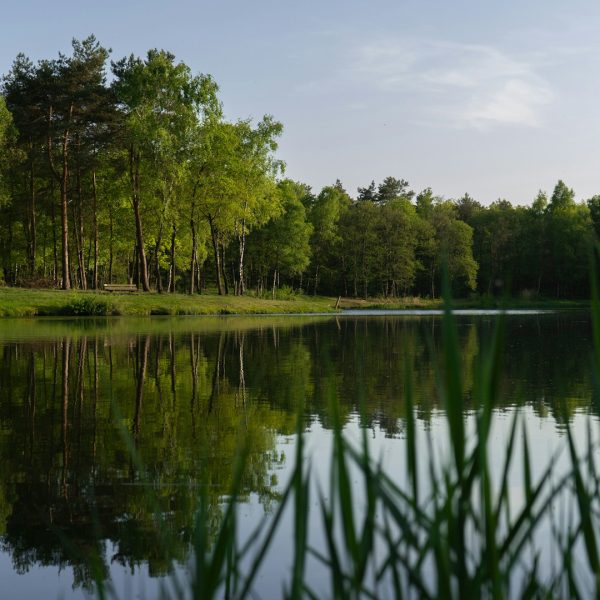
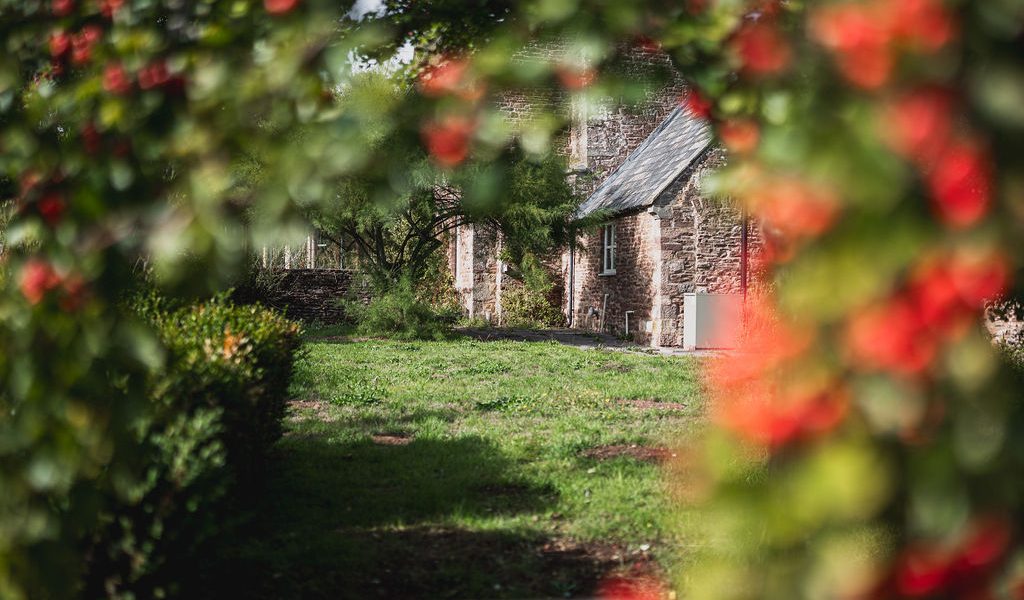
The Being Peace Centre has fifty-four acres of land for the Plum Village sangha to cultivate peace, re-wild, and welcome people of all ages and all walks of life to transform suffering in themselves and in the world.
The morning practice and blessing at the Abenhall Being Peace Centre led by much loved monastics and lay practitioners, was followed in the afternoon with practice and sharing from a four-person panel. I was asked if I might join the panel and offer a sharing alongside two UK born monastic teachers and a fellow lay teacher. I agreed and was asked to speak first.
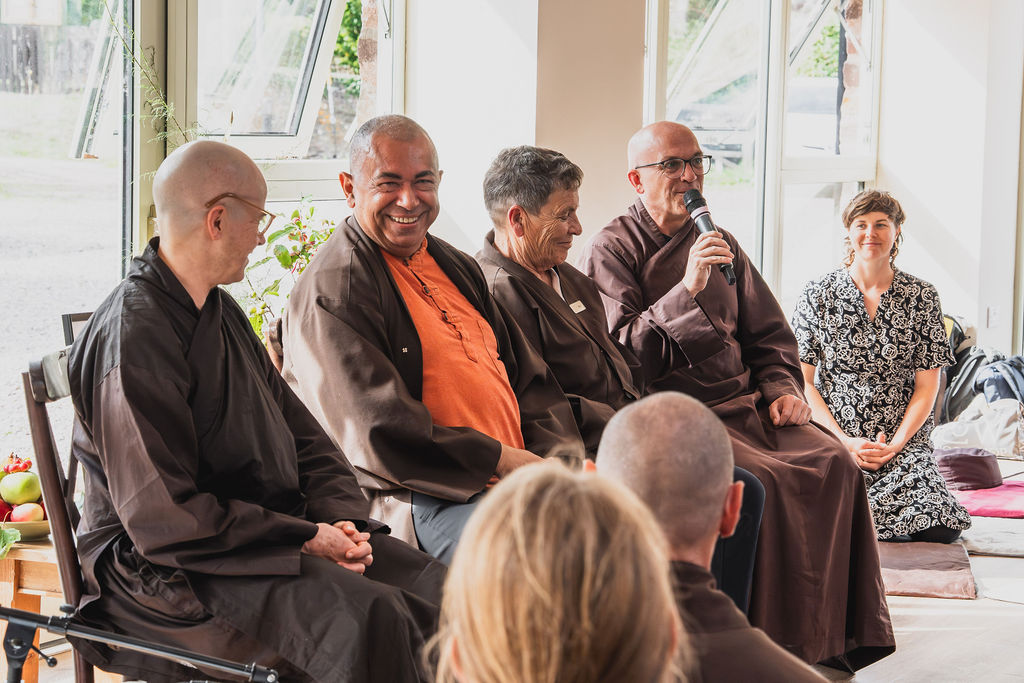
Before I spoke, I looked at the sixty or so sangha members attending the opening in-person and looked also into the camera that was streaming the opening of our Being Peace Centre across the UK and beyond.
Among those present, there was not one face that looked like mine not one black face at the Plum Village Being Peace Centre at Abenhall that was witnessing the afternoon’s historic opening, sharing and practice.
Before I spoke, I wondered why this was. I knew and loved my dear friends who were gathered in the meditation hall with their joy and open hearts but they were not truly representative of practitioners currently living in the UK. For example, were there any people living in disadvantageous circumstances or other groups representing the wide range of people from various walks of life from across the UK?
I mentioned my observations and perception of not seeing other people who looked like me during my sharing with the sangha. As I suspected, I later received a range of responses supporting or challenging my perceptions that ranged from “your sharing was really needed” to “I don’t think there is a need to speak about colour because everyone is welcome here whatever colour they are”. These views were offered with love and a calm mind even when they were different from my own views.
Following this experience and consequences of sharing, I find myself once again looking at my practice and its direction, especially now, after the death of Larry Ward, the respected African American Plum Village practitioner and senior lay teacher that may leave me as possibly the only black male practitioner, student and lay teacher in the Plum Village tradition.A situation that my dear monastic teacher, Phap Lai, reminded me of after I had offered the sharing, along with encouragement to write about my experience as a black practitioner in the UK.
The conversation with Phap Lai transported me back to Plum Village 2016 after I had received the lamp transmission, to another experience with Sister Annabel Laity, the first westerner to become a monastic student of Thây, when she offered me guidance as the first black lay Dharma teacher in the UK and suggested that I help encourage more people of colour to the Plum Village tradition. When I looked at the members of our sangha gathered at Abenhall for the opening, I realised I had not done enough for my own liking or helped realise Sister Annabel’s advice.
The words of my respected teachers on inclusivity along with Zerbanoo’s gift and her tireless work as a human rights campaigner, have motivated and reignited my intention to encourage more people of colour to practice deeply in the Plum Village tradition and to make our beloved community a more inclusive sangha for all — including youth, elders, families and people from all walks of life who wish to explore and deepen their practice of the teachings of Zen Master and Peace activist Thich Nhat Hanh.
If our sangha is to truly realise Thây’s teaching on non-discrimination and inclusiveness, our sangha body needs to continue to look deeply and realise its volition to cultivate inclusiveness as a key element of The Being Peace Centre and of our UK and worldwide sangha. Offering a warm and skilful welcome not just to people of colour, not just to people of modest backgrounds but for everyone, by recognising and listening deeply and with compassion to the diversity of human experience and people’s individual needs. And to whole heartedly commit to learn how to consciously and unconsciously not discriminate against any person, any being or any mode of life and realise our true nature of Interbeing.
Phap Lai suggested that I write as well as speak about inclusivity and this is my first attempt to write since our discussion. I hope that these words will water wholesome seeds in our sangha and beyond as we walk the path of boundless love and inclusivity together. Knowing that it is our collective responsibility to ensure we cultivate an inclusive community of practice at The Being Peace Centre and throughout our worldwide sangha.
- Zerbanoo Gifford chaired the commission ‘looking into Ethnic Minority Involvement in British life and founded the ASHA Centre which pioneer’s youth empowerment in the fields of equality and interfaith dialogue and the arts. ↩︎
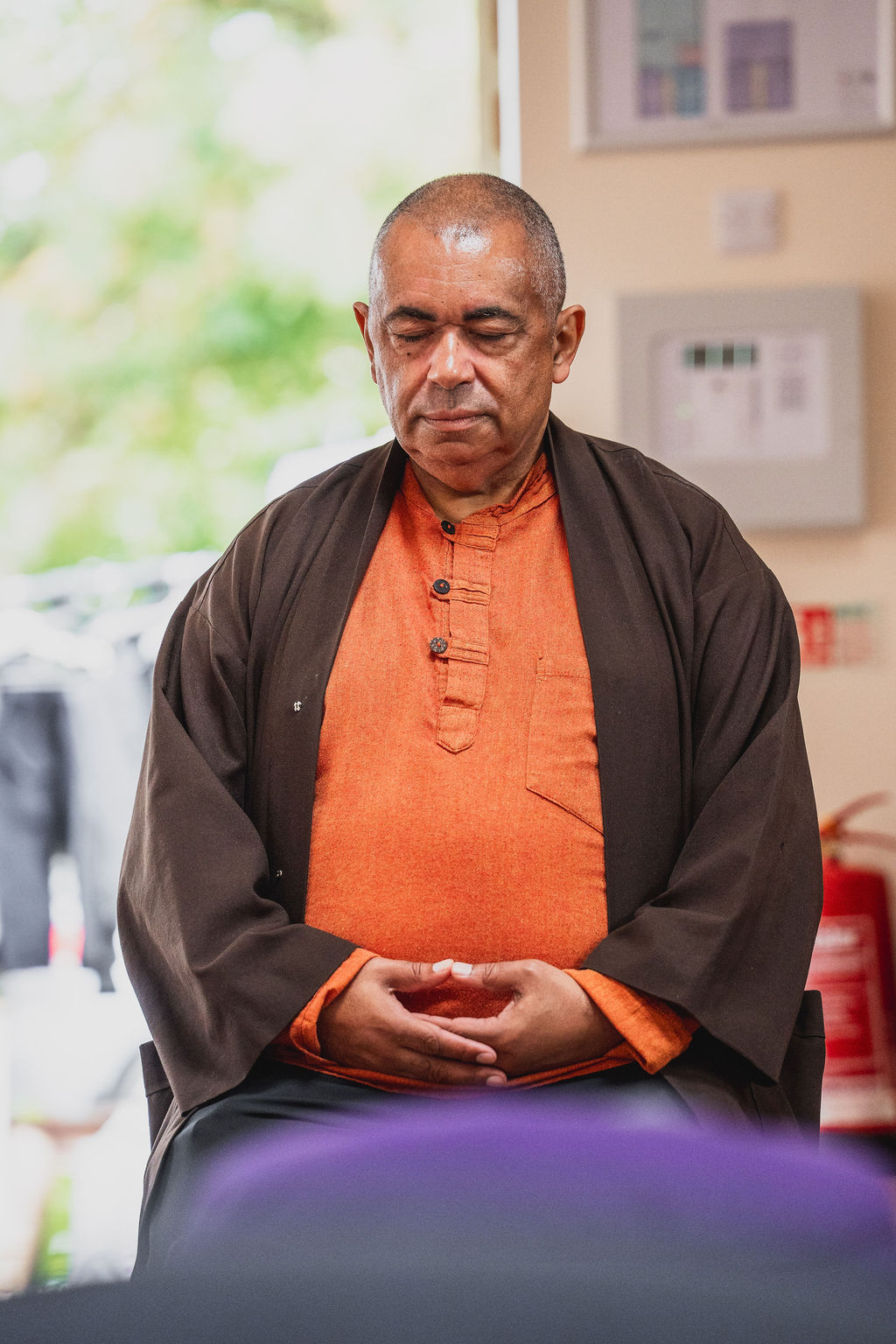
Dene Donalds, True Everpresent Peace, has practiced and studied the Dharma since the mid nineties: Practicing with Thich Nhat Hanh’s tradition since 2001, receiving lay ordination in 2007 and becoming a Lay Dharma teacher in 2016. Committed to socially engaged Buddhism, Dene has helped establish a number of social enterprises working with people with learning disabilities, people with autism, and with refugees. He also offers the teachings of Zen Master Thich Nhat Hanh in prisons.