Building a Resilient Community on Scotland’s Black Isle

Welcome to Black Isle
The Black Isle is not an island at all – it’s a 30 mile long peninsula sticking into the North Sea just north of Inverness with an area of around 100 square miles. There is a population of about 12,000 spread around seven villages with some people scattered more rurally through farms and the mainly pine forestry plantations. Many people work in the capital of the Highlands, Inverness. To the north is the Cromarty Firth with its deep water port of Invergordon and space for many moored oil rigs (currently only four!). This is where I have lived and brought up my family since 1977.
How a Community Took Action
In 2009, after the publication of the Transition Handbook by Rob Hopkins, twenty-seven people concerned about climate change got together and formed Transition Black Isle. Initially community markets were started in three of our villages, monthly, on Saturday mornings. The plan was to encourage more local trade, especially of food, and growing. Currently there are now markets in four of our villages with plans for a fifth in spring 2026.
Markets, Gardens, and Potato Day
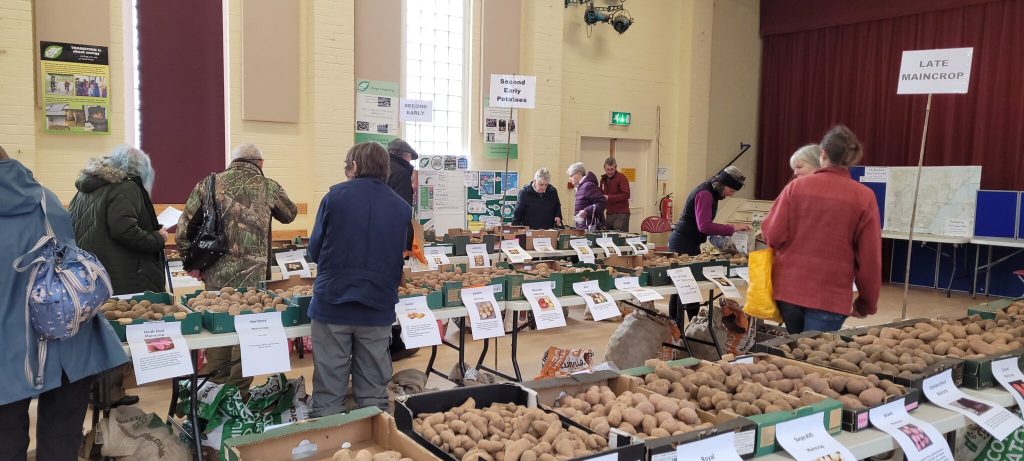
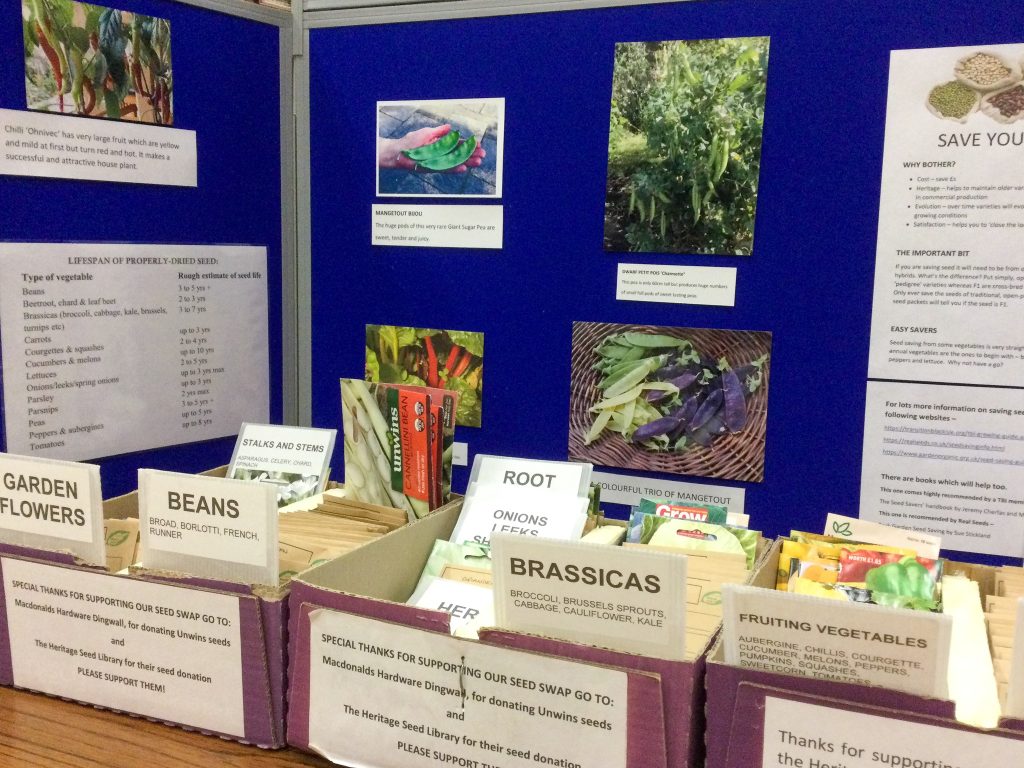
Some of these markets sell quite a lot of food while others offer mainly crafts. Community gardens and/or allotment initiatives all encourage more fruit and vegetable growing and also more community interaction and well-being. A very popular event is our annual Potato Day held at the beginning of March, when numerous varieties of seed potatoes are sold and guidance is given on growing. Seeds are also sold: many saved locally leading to varieties more suited to local conditions. It shouldn’t be assumed that because we are growing in the north of Scotland it’s only neeps and tatties! (turnips and potatoes). I am able to grow outdoor tomatoes in front of the south facing wall of my house.
Sharing, Repairing, and Lending Together
There are, of course, cups of tea and home baking at all public events. Sharing Sheds have been established in all villages sharing everything from extra veg to shops’ excess bread to school uniform – these, of course, in conjunction with other local residents.
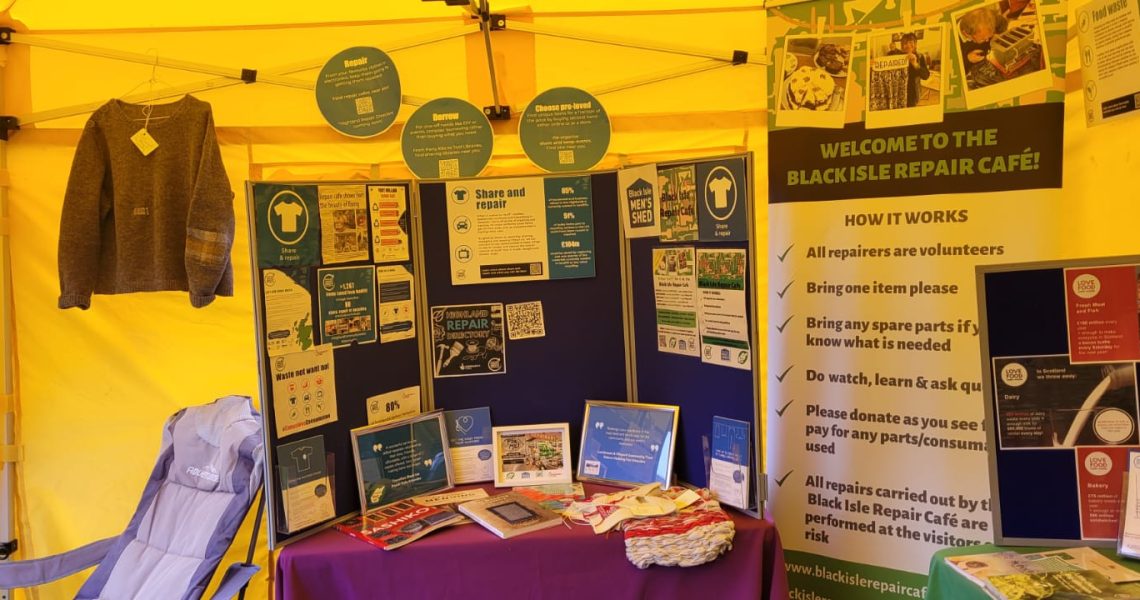
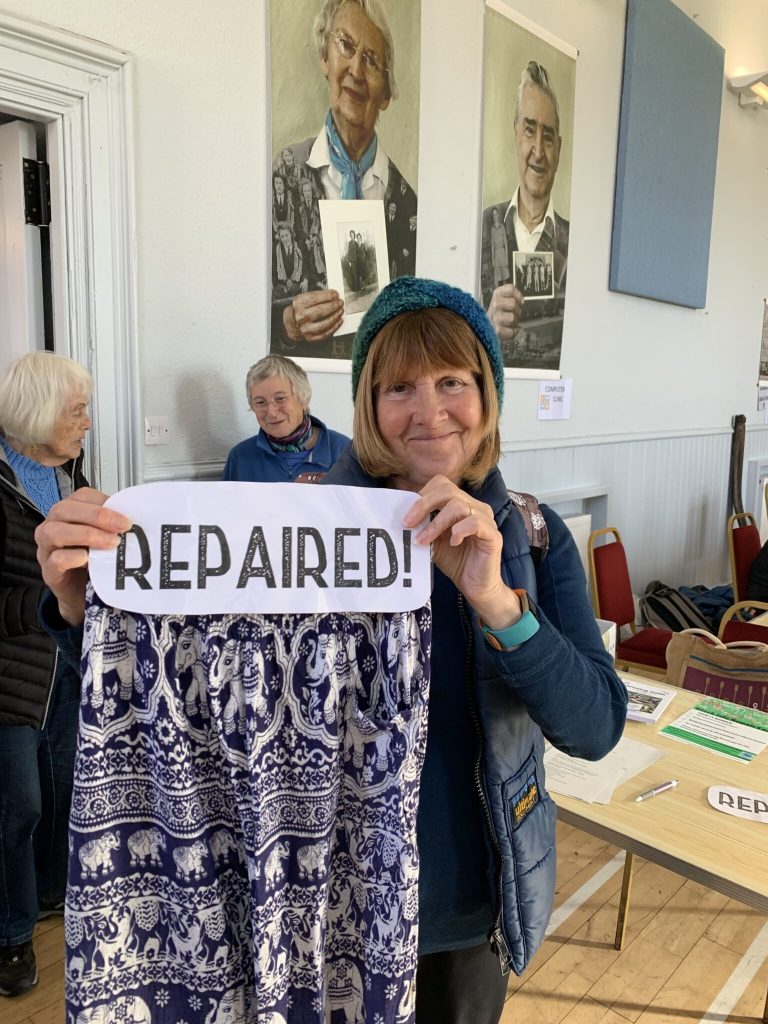
In 2023, monthly Repair Cafe’s began circulating around the Black Isle, run by volunteers. People bring items to mend and make a small donation if they can. People bring their bikes to be repaired and future care advice is offered. Tools, both garden and DIY, are repaired and sharpened with help from our local men’s shed. Any electrical repairs are carried out by someone qualified to PAT test. People with sewing machines help with sewing repairs, computers are repaired and techie help is also provided.
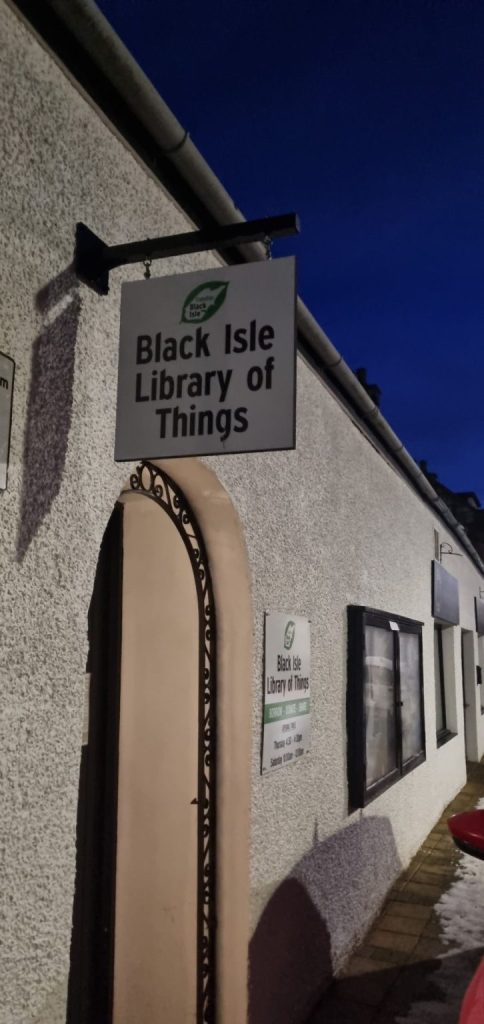
Most recently, we now have a Library of Things. A local office has been rented, an organiser appointed and over 120 items donated. The office is open twice a week or by appointment, and bikes, garden or DIY tools, extra crockery, tents and camping equipment, baby equipment and sewing machines are available to borrow.
Another popular item available for hire is an apple press enabling many groups and individuals to make apple juice, thereby reducing waste from bumper apple crops.
Creating Jobs, Skills, and Opportunities
Part time jobs have been created for community market organisers, repair cafe organiser and library of things co-ordinator. Over the years there have been various projects, for example a three year project to reduce car use and encourage walking and cycling. Our latest project is to get funding for a community energy advisor.
Find out more about Transition Black Isle: https://www.transitionblackisle.org