The River That Gave Me My Voice

In this blog post, Bob Pickup, a member of Earth Care Sangha shares about his journey to becoming an environmental activist.
I grew up and lived my first 50-ish years in Darwen, which was a valley town in the West Pennine Moors in central Lancashire at 5/700 ft above sea level, a textile/paper/chemical manufacturing town following on from the Industrial Revolution the forefront after WWll of the UK’s deindustrialisation to a consumer society, and the year of my birth (1944), late in that war, that was to pervade most of the northern UK over all my 80 plus years.
Darwen missed out on the prosperous post-war years in the UK, as the textile industry was in fatal decline and my dad being out of work for extended periods, despite his being highly skilled. Being a valley town, industry was situated down by then River Darwen which, as many of our Victorian entrepreneurs did, decided to cover over most of it so more Mills and basic housing could be built.
It was also becoming an open sewer for people and industry, running every colour in the rainbow and the smell. Fortunately the valley environment also allowed for easy access to the countryside and moors, and in the 1890s won a legal battle for access to walk uninterrupted on the moors and where Wainwright did
his early landscape explorations.
The source of the locally important River Darwen was on Cranberry Moss a watershed on the Moors between Darwen and Bolton at around 1000 ft altitude. It provided the sources of the eventual cultural defining River Ribble of which the Darwen was a major north flowing tributary, and the upper reaches of the river Croal and eventually into the south running river Mersey, via the infamous Manchester river Irwell.
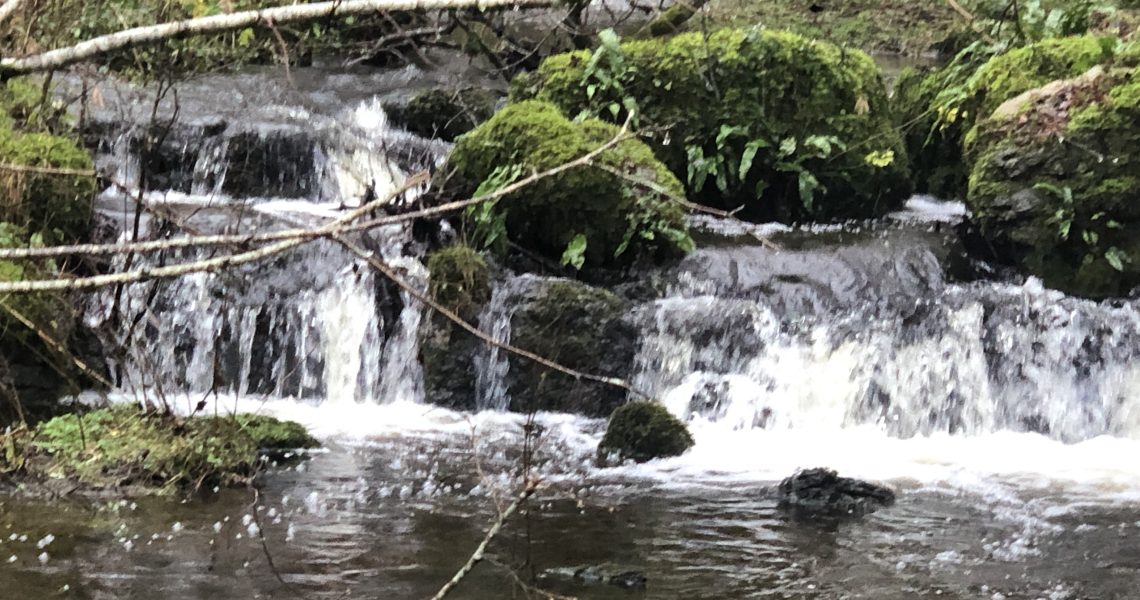
During my boyhood years the upper reaches on the Darwen for around a mile and known as Grainings Brook, because of the elevation and pristine upland Moss Habitat terrain, had been crystal clear waters with Stickleback, Minnows and clean water insects, eventually flowing into a very early mill reservoir Jack
Keys or Whitehall Lake.
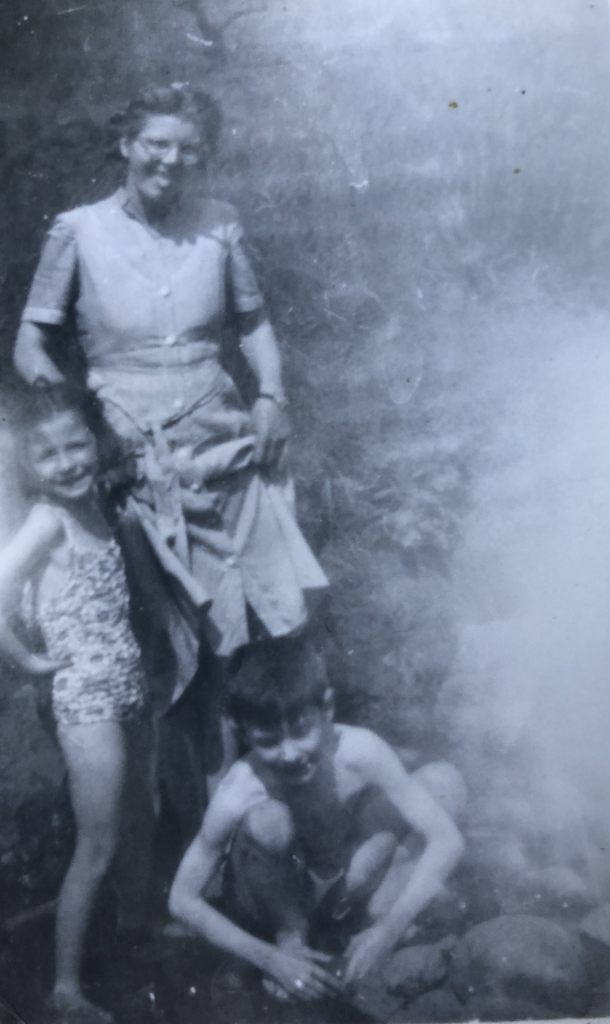
The brook and reservoir were my family’s escape into nature in the 1940s and 1950s, with regular forays picnics, paddling and catching fish and insects, and in spring the banks being blue with violets.
In the late 1970s I became aware that a local skip hire company business were applying to greatly extend their existing near by landfill site, out across the Moss to include the actual source on the River Darwen and right up to the Brook.
I lobbied the then Council, wrote to the Planning Authority objecting on environmental grounds pointing out this would include the river source spring and that consultation with the then NW Rivers Authority should be entered into.
I was eventually informed by a reporter on the local daily newspaper that the plans had been passed, but with comments from the chair of the Planning Committee, stating in respect to my objection ‘what does he know about the environment of the river and Moss’.
What really incensed me was that I was also a member of the left of centre political party who had control of the council and had lobbied known councillors about my concerns including taking
one of them on a site visit.
This was a defining moment in my life that even being active politically that the harsh reality of a depressed region of a post industrial area would sacrifice anything in the name of economic
development.
My ego then developed positively from being a shrinking violet including making headlines with the local press critiquing my views, wonderfully given some credibility with my Blackburn Quaker friends.
I did not realise at the time that was the second life defining moment in my life and my need that the things that made life good for people was the community and environment, I needed to continue to stick my head above the parapet and I started on the journey becoming an at times a passionate practical/theoretical/sociological activist on my own account that would define the rest of my life.
I still hang on with my love/some discomfort with Quakers, finding around 15 years ago the Community of Interbeing, which supported my being Quaker and which even more fitted in with my life and having a socially relevant purpose.
Also around that time an absolutely life defining, eureka moment came along, I discovered I was profoundly Dyslexic and started on a journey of becoming an expert on that spectrum.
This was followed through engaging with various Sanghas including very different traditions, eventually becoming being a part of the Plum Village UK Neurodivergent [ND] Sangha, initiated and organised by my dear friend Sylvia Clare, which led me on to becoming socially aware I was and am now diagnosed as
being heavily ADHD.
Again that would appear to be another marker that people in the ND spectrum can be so innovative to the benefit of society, even if like me I can at times not be the easiest person to engage with, and certainly not being the shrinking violet I previously described.
I sign off for now, knowing that the River Darwen largely came back to life and the EA and Blackburn Council (one of the most deprived areas in England) are continuing developing their understanding of people living and thriving with access to nature and as pleasant as possible an environment.
What is in the past, when almost no one cared, can be mitigated with passionate societies increasing respect for our environment, including spiritual organisations like Plum Village.
For me, despite all the horrendous challenges, the future can be promising.
Love and blessings to everyone, Bob, Rolling Tide Sanga (Root Sanga)