The Brown Jacket: What Does It Mean? (Part 1)

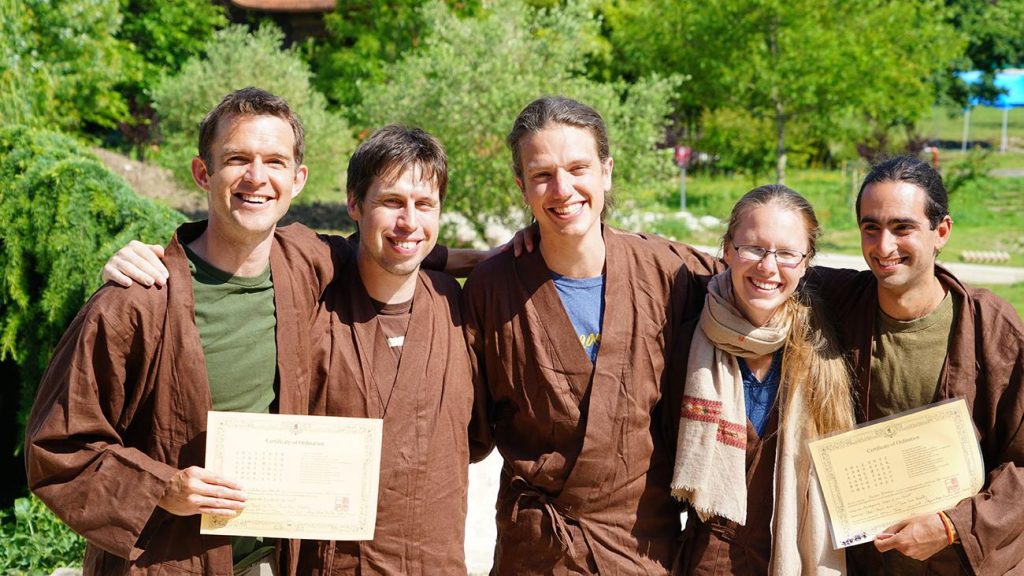
If you’ve spent time in a Plum Village Sangha, you may have noticed that some practitioners wear a simple brown jacket. For newcomers, it can raise questions. Is it a sign of authority? Does it mean someone is a teacher? Is it a uniform?
Recently in my Sangha in York we held a Day of Mindfulness exploring exactly these questions. Participants shared their first impressions of the brown jacket and some common misconceptions. Some wondered whether it created hierarchy. Others assumed it was worn by facilitators. Some saw it as a sign of commitment, while my personal favourite comment was, “I had no idea what the brown jacket meant. When I first saw one, I thought it was a very poor fashion choice!”
As we listened to each reflection, I felt a sense of responsibility to accurately describe how the Order of Interbeing came about and has developed over 60 years since its inauguration.
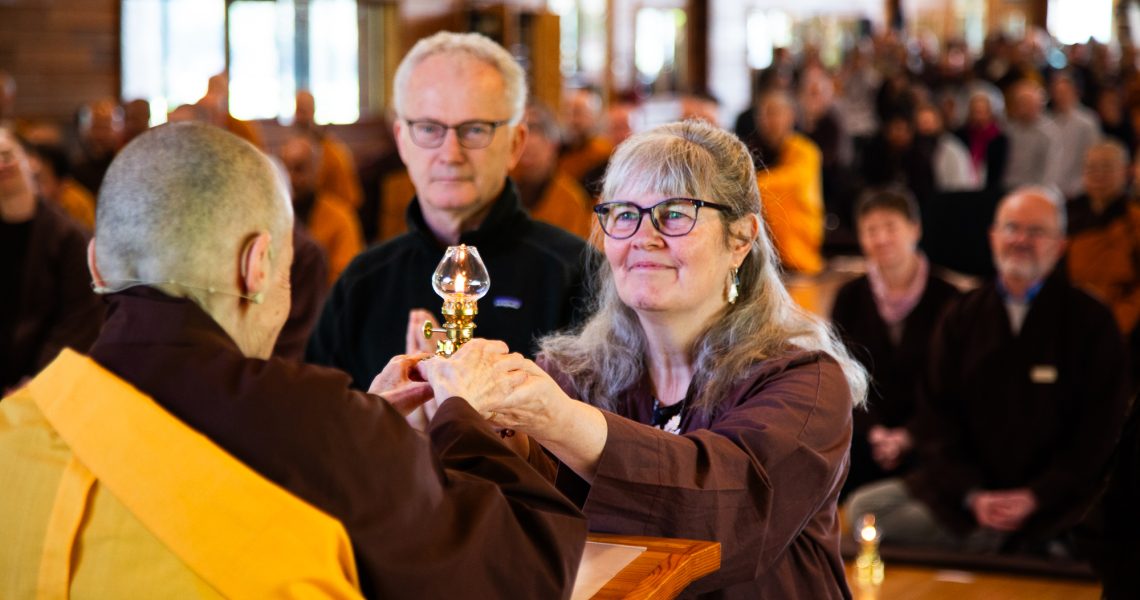
The brown jacket is worn by some members of the Order of Interbeing, a lay Buddhist community founded by Thich Nhat Hanh (often referred to as Thay) within the Plum Village tradition. It is not a symbol of rank or status. Rather, it is a reminder of a commitment to mindful living, compassionate action, and service to the community. It connects the wearer to the Fourteen Mindfulness Trainings and to a wider lineage of practice within the Plum Village tradition.
The colour brown was chosen deliberately to reflect simplicity and earthiness, and to echo the clothing worn by many Vietnamese people at the time of the tradition’s early development. This serves as a reminder of humility and groundedness in practice. Most importantly, the brown jacket represents service. It reminds the wearer that their practice is not only for themselves but also for the benefit of others.
This can be surprising because many of us naturally assume that visible symbols indicate authority. Yet in the Plum Village tradition, the intention is the opposite.
The jacket points towards responsibility rather than status, and towards community rather than separation.
In fact, Thich Nhat Hanh described the Order of Interbeing as having both a “core community” of members who have formally received the Fourteen Mindfulness Trainings and an “extended community” of people who actively participate in Sangha life. In this sense, the spirit of the Order extends far beyond those who wear a brown jacket.
The jacket is simply one visible expression of a deep commitment to practice.