Silence

In the Plum Village tradition, silence is more than the absence of words. Through practices such as silent sitting meditation, Noble Silence on retreat (observed from the evening meditation until after breakfast the following morning), stopping to breathe whenever we hear the mindfulness bell, and taking mindful pauses throughout the day, we create space to listen deeply and reconnect with the present moment. In his book Silence, Thich Nhat Hanh reminds us that moments of quiet can help us find peace amidst the noise of everyday life.
In this personal reflection, Plum Village practitioner Gill explores the many faces of silence – from discomfort and grief to connection, courage and healing.
The sound of silence..
Silence must be one of the few words to be described by what is not. Silence is defined as not noise, even the top dictionaries can’t do much better than that. I supposed if I was asked to expand on the definition, I would say it was emptiness, nothingness. However, if that is the case why is it so powerful?
Silence is a prominent feature of our lives from our very first moments on earth it becomes the centre of attention. Onlookers to our birth will wait anxiously for our first silence to end and celebrate our first cry of distress. Onlookers will do the reverse at our deaths taking comfort in our silence saying we passed peacefully if our cries of pain are absent.
It appears there is little avoiding something that exists in nothingness.
Ironically you need to look no further than music to see how complex silence is. The Tremoloes told us it was golden but on the other hand Simon and Garfunkel warned us that silence grows like cancer. The contradiction certainly doesn’t end there. Silence meters out the greatest of punishments, to be silenced, to be given the silent treatment, as a weapon its stony. It can frighten us when it’s eerie and when it’s powerful it roars.
However, silence isn’t just present in our worst enemies, it’s there in our best friends and carers too. There are few greater gifts we can give than being able to remain silent as we listen with empathy to those who suffer. We allow our silence to comfort. As humans we can connect most effectively through our silence.
How come that what appears to be the easiest thing to do is in fact the most difficult thing to achieve? When listening deeply we see that silence between words is often more powerful than the words that cradle it, while unsaid things can speak volumes.
Silence, courage and control
Silence raises many questions, how can something that is so fragile that can be broken by the drop of a pin also be the bravest thing we do. If breaking silence is seen as an act of courage, what then about keeping silent is perceived to be the most cowardly, what if it’s a secret?
It seems that for us to be comfortable with silence it has to exist in a context. The phrase ‘they were silent’ may be enough to bring anxiety to our brains as we are hard wired to have a negativity bias. There are those who can barely tolerate silence much like those who are frightened of the dark. Another thing that’s defined by what it isn’t.
Silence can be frightening to those that wish to control us. My friend is a ‘silent sitter’ protesting against the killing of children in Gaza. She has been arrested multiple times and can be prosecuted under the terrorism act. Some would say that this is a massive over reaction to silence.
Being told to shut up, stop chattering and be quiet were often said to me and for good reason. However, I think if I had refused to talk that would have brought forth far more anger from my teachers and parents. Why is silence such a threat to authority? Are we so desperate to control people that we see silence as defiance, obviously so.
Learning through loss
From a personal perspective silence has bought me the greatest pain, fear, discomfort and joy. For example, I had thought that my marriage ended because we had nothing left that we could talk about but I realise now that it ended because we could no longer sit in comfortable silence together.
In the end the silence between us was not something to be embraced but something to be feared. It brutally highlighted what neither of us wanted to acknowledge. Rather than treasure silences as we used to, we treated them like a ditch that needed filling until one day I could do it no more. A 44-year relationship sadly reached a point of no return because of agonising silence not words.
Finding the practice of silence
It has taken me until my 60s to respond to the shut ups, be quiet, stop talking of my school days. To some it must sound ironic that a born chatterbox has taken to silence. In this latter part of my life I have taken to looking out for those that practice silence so I can share it with them. They say practice because it’s a work in progress. External silence is a lot easier to achieve than the internal.
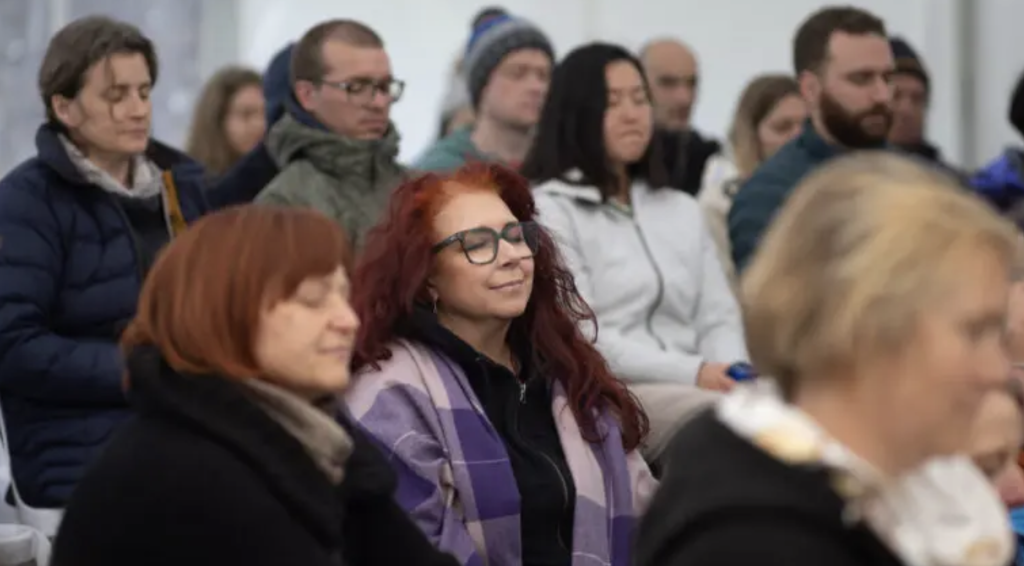
I go to Buddhist and Quakers meetings not because I would define myself as either but because I love being in the presence of those that love silence. During my three-month stint in a Buddhist monastery we had whole days of silence, I was always sad when those days ended. I never wanted to start speaking again.
I find it so relaxing to be silent. Whilst I am grateful for my ability to tell a story and tell people how much I love them overall talking causes me more angst than pleasure.
I talk too much for a lot of different reasons, because my brain gets over stimulated, because I’m nervous, because I’m confident, in an effort to control, to justify, to excuse, the list is expansive.
My talking rarely ever brings me peace of mind or comfort and that’s just my external noise; my internal noise is far worse. So, when offered the opportunity to practice silence alongside other silence seekers I take it.
Silence as refuge
In my grief following the end of my marriage, silence has been my balm and refuge, I believe I better understand myself and others because of it. What I have realised just like anyone who has ever left themselves accidently muted whilst talking on a zoom call is that 90% of what we say is superfluous. For most of us it’s our presence and light that we bring to the world, it’s that which is important, it’s where our value lies. We don’t need anyone to open their mouths to feel their magic, comfort or love.
So will I remain silent for the rest of my days? No, dream on! But maybe, just maybe the awareness of my noise and my understanding of silence will bring myself and others some peace.
Further Reading & Resources
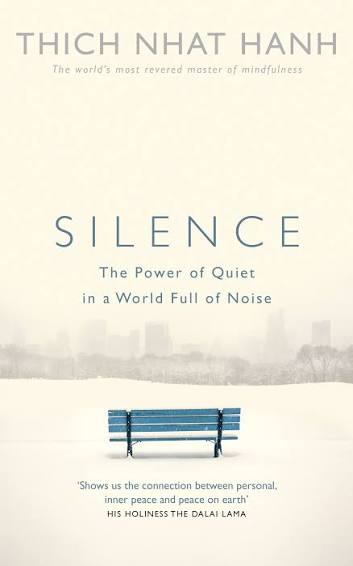
If this reflection has inspired you to explore silence in your own life, you may enjoy learning more about silent sitting meditation and the practice of Noble Silence via the Plum Village app or Thich Nhat Hanh’s book Silence. Even a few moments of quiet each day can help us return to ourselves and the present moment.
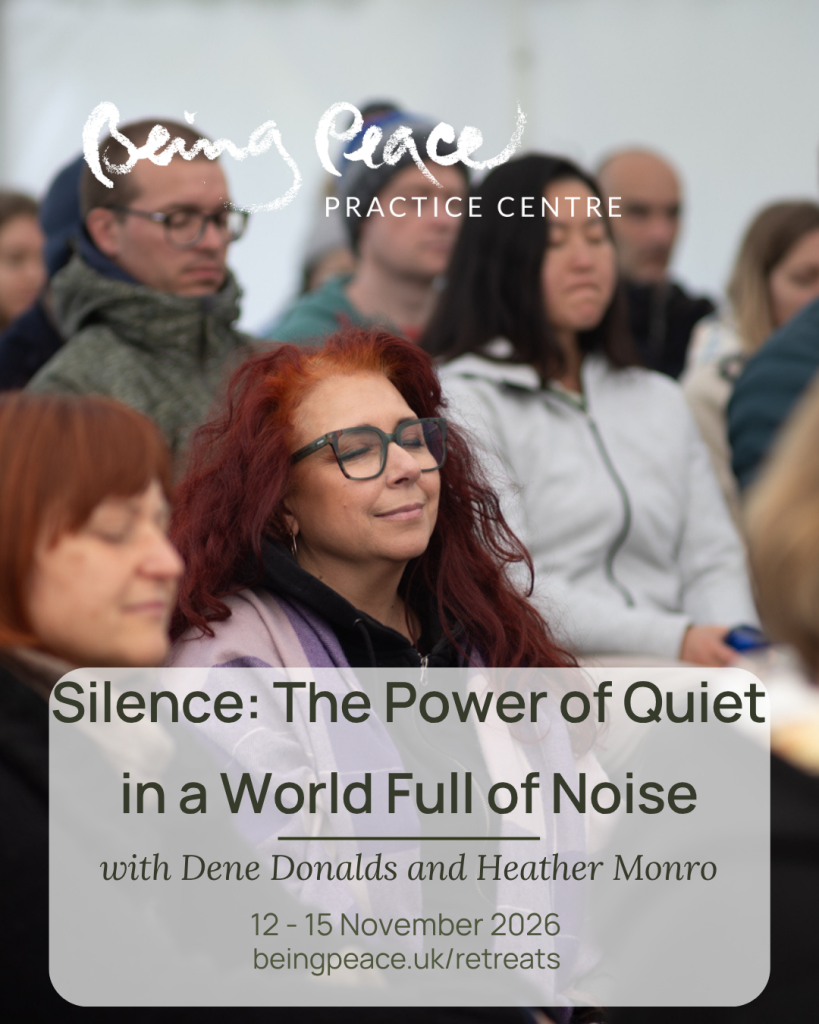
If you’d like to experience silence in a supportive community, a retreat at Being Peace Practice Centre offers opportunities to practise mindful eating in silence, Noble Silence, and other mindfulness practices in a nourishing environment.
For example this retreat Silence: The Power of Quiet in a World Full of Noise, guided by UK Dharma Teacher Dene Donalds.
About the author:
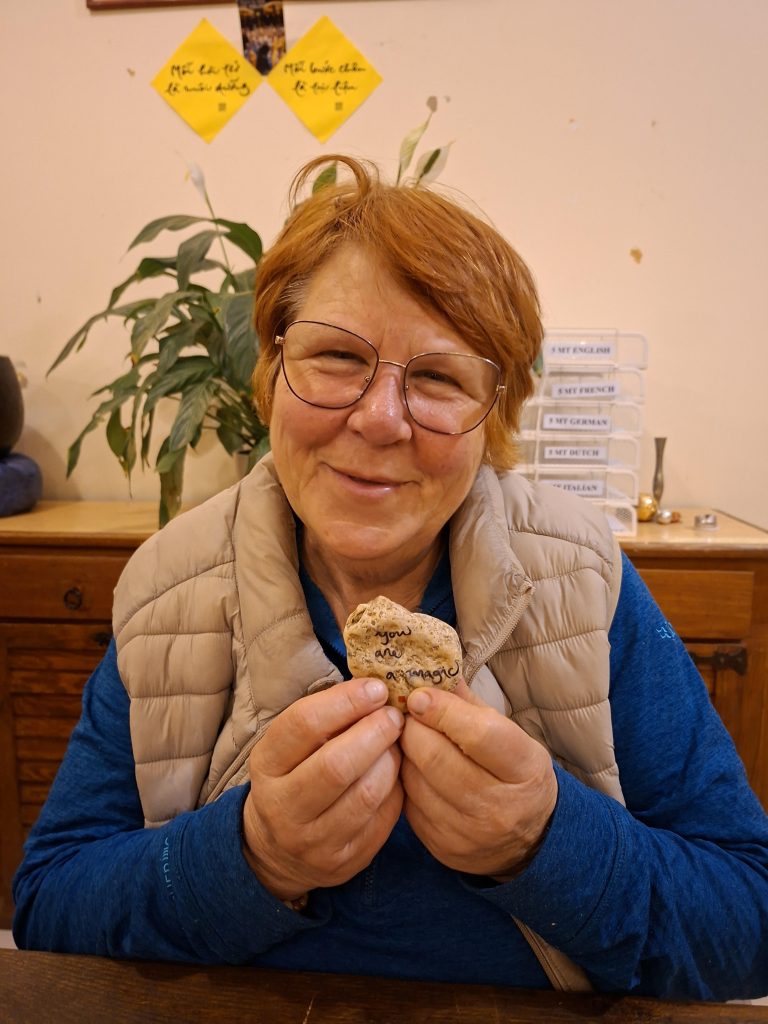
Gill has just moved back to the UK after 10 years away. She practises with a number of Plum Village sanghas, loves yoga, lives in a caravan , with about 3 suitcases of possessions and feels like she is the richest and happiest woman in the world. The photo is of a stone painted by a wonderful Sister in Lower Hamlet during the 2025/2026 Rains Retreat.