

The Origins of the Order of Interbeing (Part 2)

The Order of Interbeing began 60 years ago, in 1966, with six people who were working with Thay (Thich Nhat Hanh) to develop the School of Youth for Social Services in Vietnam. Among the first members was Sister Chân Không, who remains one of the most respected figures in the Plum Village tradition today.
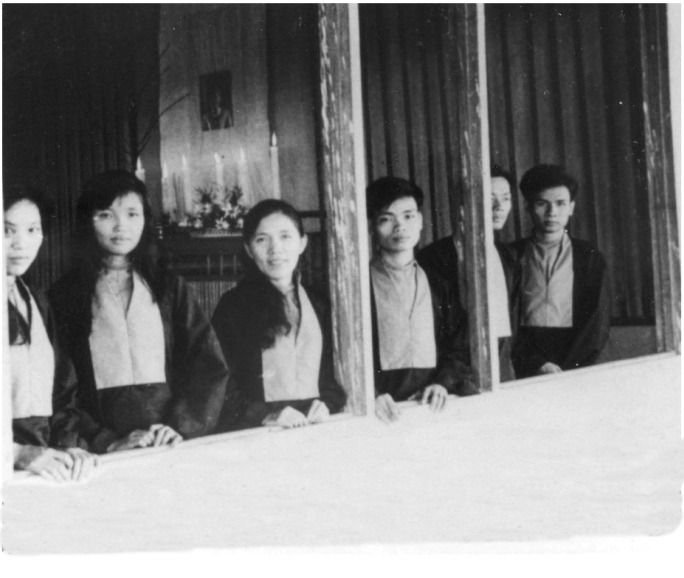
To support their work, Thay offered them his newly compiled Fourteen Mindfulness Trainings. These Trainings were intended as a guide for both personal practice and engaged action in the world. They build on the Five Mindfulness Trainings (ethical guidelines for mindful living, based on Buddhist precepts) and help to cultivate understanding, compassion, and what Buddhism calls bodhicitta (the mind of love).
The intention was for all 300 trainees of the School of Youth for Social Services to receive the Fourteen Mindfulness Trainings. However, soon afterwards Thay was exiled from Vietnam and unable to return, and it was not until 2005 that the next formal transmission took place.
The Order of Interbeing began as an expression of service to a country torn apart by war and has since grown into a worldwide community. Today, Order members are invited to reflect on how they can be of service to their local Sangha, their wider community, and, in some cases, the international Plum Village community.
An important part of the practice, as Sister Chân Không describes, was to have a Day of Mindfulness each weekend. Practitioners would arrive on Friday evening and, with the mindful placing down of a bag, the practice began. The weekend included the simple yet profound practices we know well today: sitting meditation, mindful eating, walking meditation, and bringing awareness to everyday activities.
As Thay writes:
“Forged in the crucible of war and devastation, these guidelines [the 14MTs] helped the first six brothers and sisters, who were doing relief work and helping to rebuild bombed villages, cultivate serenity, understanding, and compassion even in the midst of the tragedy of war. Though they continued to stay busy helping war victims, organising demonstrations, printing books and leaflets, running social service projects, and organising an underground network to draft resisters, they renewed themselves with a Day of Mindfulness each weekend” (Interbeing: xxvi).
This balance between service and practice remains at the heart of the Order today. The circumstances may be different, but the question is much the same: how do we sustain ourselves while responding to the suffering we see in the world?
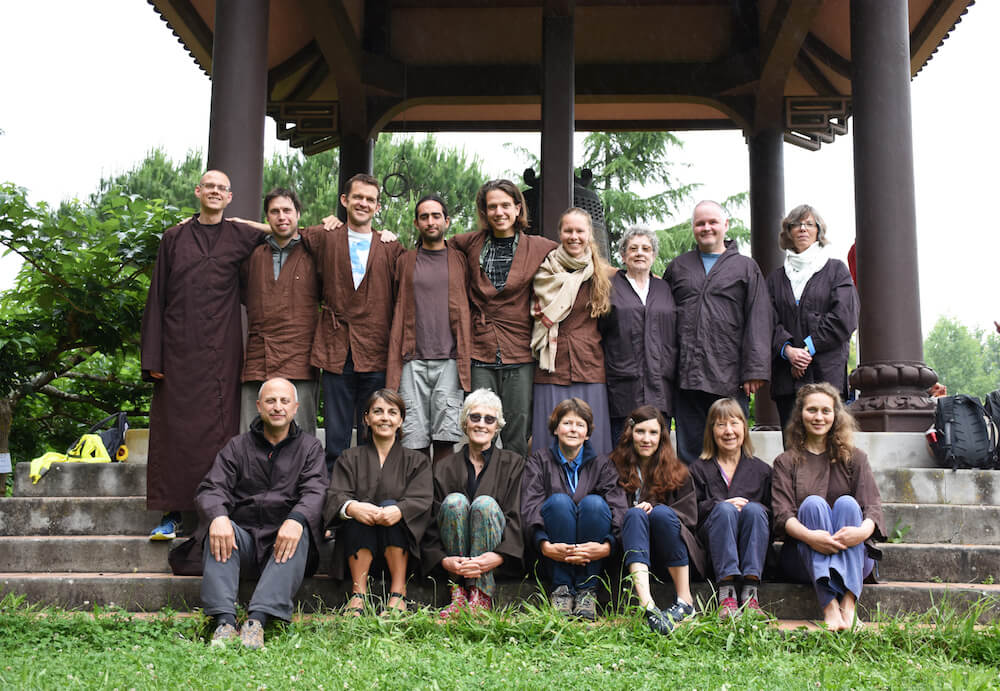
One aspect of becoming an Order member that can be challenging is the aspiration to undertake around sixty Days of Mindfulness during the period of Aspirancy. How to incorporate these into an already busy life is often a discussion between Aspirants and their mentors. Fortunately, this can be approached creatively. Personal Days of Mindfulness, lazy days, or days spent mindfully caring for others can all form part of this practice, alongside Days of Mindfulness with Sangha.
In Part 3, we’ll explore the pathway from Sangha member to Aspirant to Order member, and what actually changes when someone receives the brown jacket.