Diamond Moon Sangha: Practising Together in Fullness

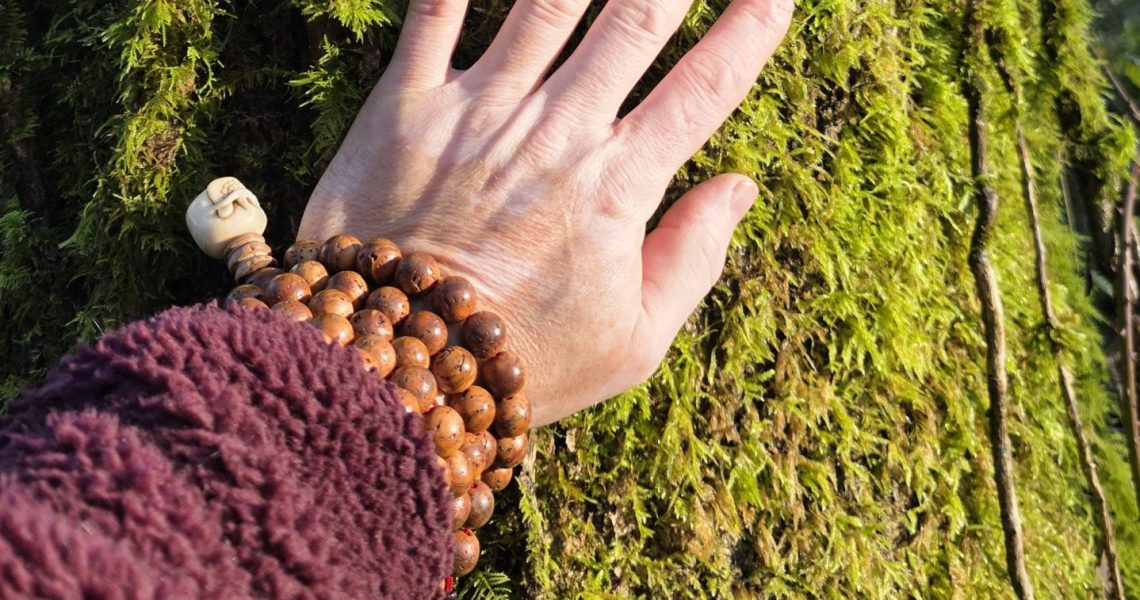
[Feature image shows a person’s hand, with prayer beads around their wrist, touching moss on a tree trunk]
What is Diamond Moon Sangha?
Honestly, I think Diamond Moon Sangha took shape the moment I realised how many of us were showing up in Plum Village spaces, quietly holding pain, difference, disability, neurodiversity, trauma, or just chronic exhaustion. So often we were doing this on our own. Not because nobody cared, but because our ways of moving through the world, our needs and rhythms did not always have a place to settle. We mask out of self-preservation throughout our lives.
Out of that, Diamond Moon Sangha was born. It came straight out of lived experience: an aspiration for a space where we don’t have to reshape ourselves or apologise for how our minds or bodies show up. Somewhere we can practice in the spirit of Thay’s teachings, his translation of upeksha, shaped with gentle understanding and the little adjustments that really opens up the path for everyone.
This isn’t some big initiative. There’s nothing especially polished about it as we are all learning through our practice and connection, together. It’s simply a Sangha, a home for Disabled (Dis), Neurodiverse (N-D), and Mentally Diverse (M-D) practitioners, and for anyone who wants to practice with compassion and inclusivity.
Why This Sangha Matters
[Image shows a passion flower blooming against dark green foliage]
From what I’ve seen and experienced in the world we live, ND and Dis people aren’t always listened to, unfortunately this is true of our Buddhist and Plum Village (PV) communities, (though happily this is improving within PV). Not with the kind of steady, patient attention that Thay talks about. And when you’ve spent years being talked over, corrected, or “managed,” just being truly heard turns into something rare and precious.
That’s why guided meditations and Dharma sharing are the heartbeat of Diamond Moon. When someone opens up about pain, joy, confusion, sensory overload, trauma, or resilience, something shifts for everyone in the group. We teach each other in ways no textbook or video ever could. We are also beautifully supported by accessible professional mental health practitioners online with each Sangha, alongside safeguarding experience, combined with years of signposting to various supportive agencies, so there is a gentle net to catch and support us.
Thay says, “The most precious gift we can offer others is our presence.” I see that every time someone shares at their own pace, stims quietly, takes their time to find words, or uses the chat because speaking is hard. Presence isn’t about getting it right. It’s about being wholeheartedly present, which can be tough as someone bares their heart around distressing experience ableism & prejudice.
Ableism we experience as a Dis, N-D or M-D person can be overt, but it can also appear in small, micro, easily missed ways. For example, as an able-bodied person we may take the practice of Touching the Earth for granted. With deep looking, we can ask how to offer this practice to someone with physical differences, pain, fatigue, trauma, or neurodivergence. Even the invitation to imagine touching the ground may not be accessible or supportive for everyone. In truth, the heart of the practice is not a perfect physical form. It is touching the energies of humility and gratitude within us, which can be cultivated in many ways. Which is the way we may offer the practice in sessions. This is one example of how, with awareness and understanding, we can expand our practice so more people can truly take part.
Interbeing through our difference is not just an idea when you practice with people whose bodies and minds work differently from yours. It becomes real, you start to notice how we’re ‘inter-are’, like ripples spreading across a lotus pond. One person’s courage to show up exactly as they are gives others room to do the same.
Thay says, “When you touch one thing with deep awareness, you touch everything.” I see it when one person speaks their truth, the whole Sangha breathes a little easier.
As facilitators with N-D, M-D and Dis we don’t look at disability or neurodiversity as barriers. We see them as facets of a diamond each one shining in its own way.
Diamond Moon Sangha is meant to be a safe haven. A place where nobody gets left out or forgotten. You don’t have to mask, perform, or force yourself through pain just to keep up. We encourage you to bring whatever supports, so you may enjoy practice together. This may mean having your camera on or off, reclining, using a stim-supportive tool, moving when you need to, or having your Dharma sharing read out for you via direct chat with a facilitator.
Here’s some aspects we aspire to offer in & out of sessions:
– Live captioning for all our meetings, for accessibility and processing differences
– Sensory-friendly practice: gentle lighting, soft facilitation, and you never have to turn your camera on
– Flexible participation: come late, leave early, move or lie down, stim, or just listen
– Adapted meditations shaped to respect different sensitivities and trauma backgrounds
– Quiet spaces for grounding, resting, or simply being present without a word
I feel that Inclusiveness isn’t some final achievement. It’s ongoing adapting growing understanding, i.e. as we learn, expanding through deep listening.
Why “Diamond Moon”?
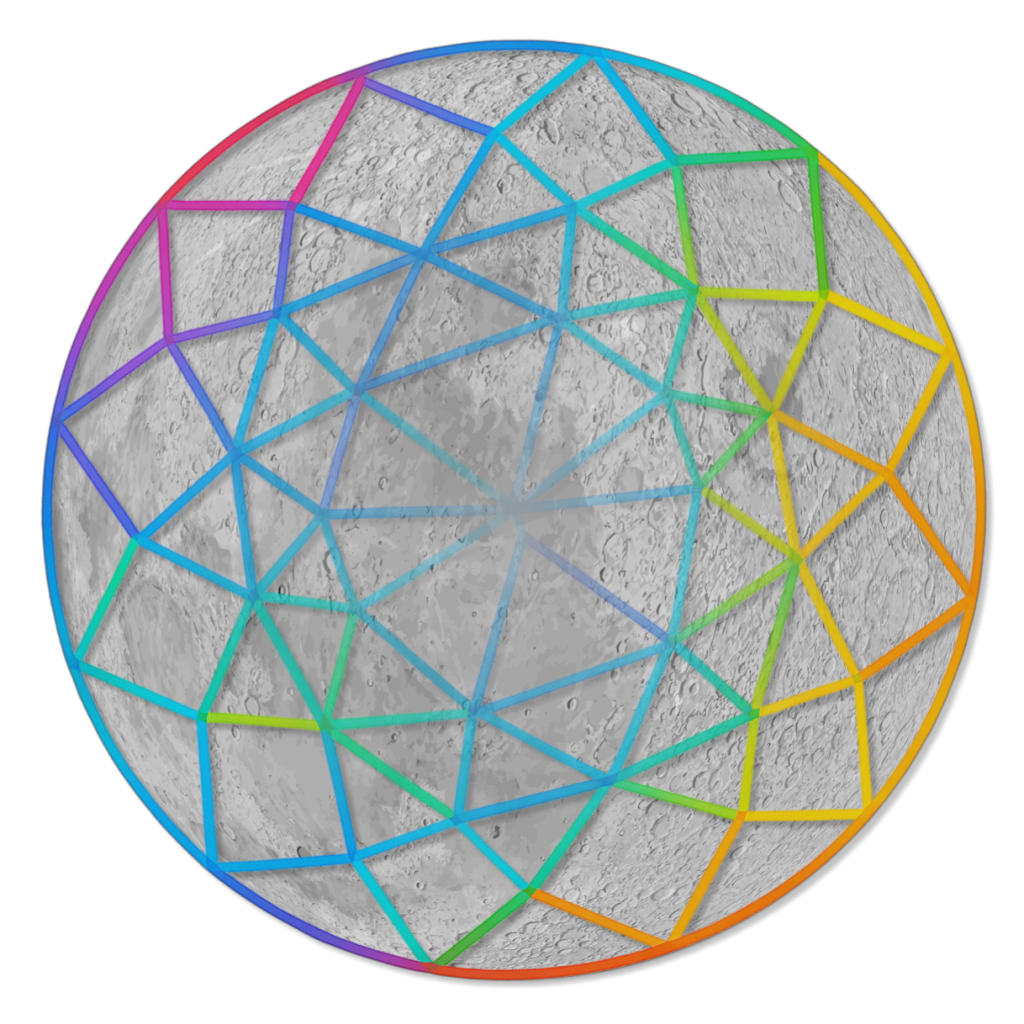
[Image shows a silver-grey moon with a rainbow coloured dream catcher overlayed on top]
The name came from a Zen teaching the finger pointing at the moon a reminder that teachings are just guides, not the destination itself. The moon shines on everyone, no exceptions, and that’s what we hope the Sangha does: welcomes everyone, just as they are.
The diamond stands for all our lived experiences each facet brings its own beauty, inner strength, and truth. N-D is not a one size fits all.
So together, Diamond Moon isn’t about obstacles. It’s about the light we practice under, the ways we reflect it, and the space we make for each other. A chance to be seen and heard without anyone trying to “fix” you. Opening a way to discover that, through our differences, our compassion only grows deeper.
Thay says, “We are here to awaken from the illusion of our separateness.” In our Sanghas and practice, this is one small way we wake up together.
If you feel called to join us whether you identify as Disabled, Neurodiverse, live with mental health challenges, searching for a more inclusive space you are so welcome here. Exploring a space where our differences are celebrated through adaptive practice.
Sib. Yonten Phuntsok  (They/Them/We), Disability & Neurodiversity Rep. PVUK
Glossary
Upekkha: translates to equanimity or even-mindedness, or mental balance. It describes the ability to remain stable, peaceful, and non-reactive in the middle of life’s changing ups and downs. For example not being overcome by despair, aversion or anxiety about a situation or our suffering.
Abbreviations: Disabled (Dis), Neurodiverse (N-D), and Mentally Diverse (M-D), Sibling (Sib.) gender inclusive term for a monastic (e.g. sister, brother, sibling)
Useful Links
- Inclusive practice resources can be found here: https://web.plumvillage.app/meditations/accessibility-to-practice
- Diamond Moon Sangha website https://diamondmoonsangha.com
- Ableism & Disability in the Mindfulness Practice Community Primer https://docs.google.com/document/d/1hJid9zIeKPJA37XRgJ8DSCkFKv3DwTtvVx3GbWaxAh0/edit?tab=t.0